Manufacturing
Preventive maintenance without paperwork: keeping machines running, not chasing logbooks
In many factories, maintenance runs on two things: the experience of a few senior technicians and a logbook that is filled in after the fact. Machines are fixed when they stop. Servicing happens when someone remembers, or when a buyer audit is coming. Spare parts are ordered when the last one has already been used. Everyone is busy, and yet the same breakdowns keep coming back.
Preventive maintenance is the discipline of servicing equipment on a plan, before it fails. Done on paper, it is hard to sustain. Done with a simple digital system, it becomes a routine that runs itself and leaves a record you can learn from. This article explains how to set it up without turning it into a large project.
What goes wrong with the logbook
- No reliable history. It is hard to answer "how often has this machine broken down this year, and why?" when the answers are spread across handwritten pages.
- Schedules depend on memory. Lubrication, belt checks and calibration slip when the floor is busy, which is exactly when breakdowns cost most.
- Downtime is not measured. Production knows a line stopped; maintenance knows a part was changed; nobody has both facts in one place.
- Spares are a guess. Without usage history, parts are either over-stocked or missing when needed.
The building blocks
1. An asset register
Every machine and important piece of equipment gets a unique ID and a label, ideally a QR code. Record the type, make, model, location, line or section, installation date and any warranty or service contract. For a sewing floor this may mean hundreds of machines; for a dyeing or processing plant, fewer but more critical assets such as boilers, compressors, generators and dyeing machines.
Group assets by criticality. A machine that stops a whole line, or creates a safety risk, deserves more attention than one with an idle spare beside it.
2. Maintenance plans
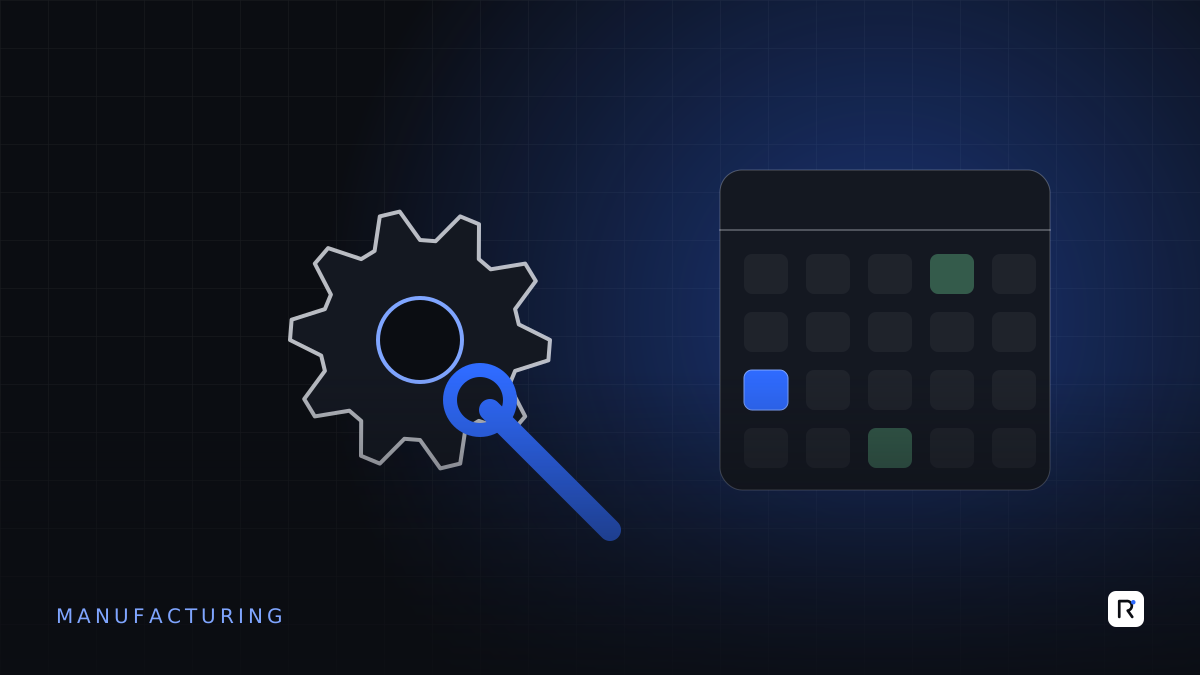
For each type of asset, define the tasks and how often they are due. Frequency can be based on calendar time (weekly, monthly), running hours or production count. Start from the manufacturer's recommendations and your technicians' experience, then adjust with real history.
3. Work orders
Each planned task, and each breakdown, becomes a work order: what needs doing, on which asset, by whom, and by when. When the job is done, the technician records what was found, what was replaced and how long it took.
4. Breakdown reporting from the floor
Operators or supervisors report a stopped machine by scanning its label on a phone and choosing a symptom. The maintenance team is notified immediately, and the time the machine stopped is captured at the source rather than estimated later.
5. Spare parts linked to jobs
Parts issued from the store are recorded against the work order and the asset. Over time this shows which parts are used most, on which machines, and sets sensible minimum stock levels.
The goal is not more paperwork in digital form. It is a short list each morning of what needs doing today, and a record that writes itself as the work is done.
What a technician's day looks like
- The technician opens the app and sees today's planned tasks and any open breakdowns, sorted by priority.
- At the machine, they scan the label to open the right checklist.
- They tick through the steps, add a photo if something looks wrong, and record parts used.
- They close the job. The next due date is calculated automatically.
If any step takes longer on the phone than in the logbook, the design needs work. Technicians will judge the system by whether it saves them effort, not by its reports.
Measures worth tracking
A few simple measures, calculated from your own records, tell you whether maintenance is improving:
- Planned maintenance completion: the share of planned tasks done on time.
- Breakdowns by asset and cause: where failures repeat, and whether a pattern points to a missed task or a training issue.
- Mean time between failures: how long, on average, a machine runs between breakdowns.
- Mean time to repair: how long, on average, it takes from report to running again.
- Downtime by line: production time lost to equipment, which production and maintenance can now discuss from the same figures.
Do not set targets for these until you have a few months of honest data. Early figures often look worse than expected simply because problems are now being recorded.
Common mistakes
- Registering every asset in detail before starting. Begin with the critical assets and one section. Add the rest as you go.
- Plans copied from manuals without review. Generic schedules can be too frequent for some machines and not frequent enough for others. Let experienced technicians adjust them.
- Breakdowns reported by phone call only. If the report does not create a record, downtime will be invisible again.
- Maintenance owns the system alone. Production supervisors need to report breakdowns and see response times. Store staff need to issue parts against jobs.
- No review routine. A short weekly meeting on repeat breakdowns and overdue tasks is what turns records into fewer failures.
A phased approach
- First month: label and register critical assets in one section, define their plans, and start digital breakdown reporting.
- Second and third months: run planned work orders, link spare parts, and hold a weekly review using the first measures.
- After that: extend to the remaining sections, refine plans from history, and connect to production and store systems.
Questions to ask before you begin
- Which ten machines would hurt most if they stopped tomorrow?
- Who will own the asset register and keep it current?
- How are breakdowns reported today, and how long before maintenance knows?
- Can the store issue parts against a specific machine?
- Who will review the weekly figures, and what will they do with them?
Where RAED fits
We build maintenance systems that technicians and supervisors can use from a phone, with QR-labelled assets, planned and breakdown work orders and links to store and production data. We start with your most critical equipment and keep the daily routine simple.